
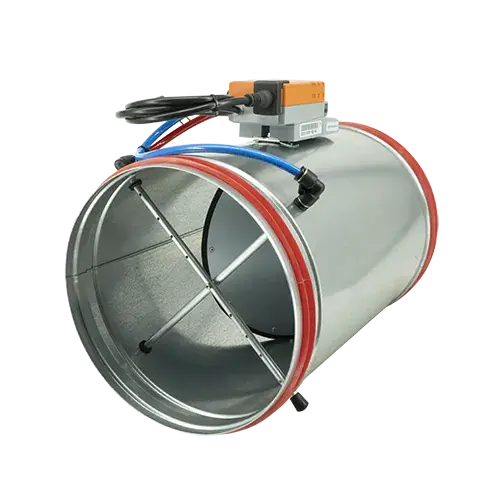
VAV (variable air volume) dampers give a ventilation system the intelligence to respond to the requirements of individual areas within a building, adjusting the volume of air reaching each zone as occupancy and demand shift through the day.
CEG supplies VAV dampers, actuators, and control components to mechanical and engineering contractors, building services consultants, and main contractors across the UK.
VAV dampers we supply can often be specified for integration into a building management system, so each zone’s demand is monitored continuously and airflow regulated automatically, rather than requiring manual adjustment.
Our manufacturer partners cover circular and rectangular configurations, and our team gets involved right at the specification stage.
For high-quality VAV dampers that suit a wide range of commercial and industrial ventilation applications, get in touch with our team today.
Chosen by Contractors and Consultants Across the UK
CEG doesn’t compete with the M&E contractors we supply.
We’re a product specialist, and the boundary between our role and the installer’s is clear from the first conversation.
It’s why we’re trusted to support VAV requirements across data centres, healthcare facilities, offices and education projects, each with its own airflow and control demands.
Here are the main reasons that contractors and consultants bring their VAV damper enquiries to us.
Getting the Right Fit for Your Building
Before we recommend anything, our team gets to know the building and the brief, not just the spec sheet.
Clift Graham, our managing director, is a qualified mechanical engineer, and he draws on that background to guide engineers and contractors toward the configuration that fits the project rather than the one that’s easiest to quote.
This creates a conversation that starts with engineering, not the order value. It’s the reason contractors bring us the harder specification questions and trust us to get it right.
Responsive Technical Support
A specification question on damper sizing or control integration gets a prompt answer from someone who understands the product, not a holding message while it gets passed along.
Our team’s building services background means the conversation happens at the right technical level from the first call.
Alternatives and Flexibility
If a specified damper doesn’t fit the budget or the ductwork already installed, we work through the options rather than leaving you to start the search again.
Access to multiple manufacturer ranges allows us to explore suitable alternatives where available. We review the requirement and pass it to the manufacturer best placed to deliver it, rather than leaving you to compare ranges yourself.
Constructionline Certified
CEG holds Constructionline certification, which most public sector frameworks and main contractor supply chains in the UK ask for during vetting.
Where a project needs that documentation before work can start, we have it ready at enquiry stage rather than after a follow-up request.
Get Help Selecting the Right VAV Damper
If you’re specifying VAV dampers for a project, CEG can help before the order goes in rather than after.
Send us the airflow rates, duct sizes and control requirements for each zone, and our team will assist with selecting the appropriate VAV solution, circular or rectangular, pressure independent or standard.
Contact our technical team today or call 0141 212 3388 to discuss your specification and request a free quote.
Why Choose Variable Air Volume Damper Control
Traditional constant-volume systems push the same airflow through every duct regardless of demand, while a VAV damper delivers only what a zone needs at that moment.
That single difference drives the core of every benefit.
Energy and Cost Efficiency
A damper that only delivers the air a zone needs cuts unnecessary fan work.
Over the building’s life, that adds up to lower energy consumption, lower operating costs, and better overall system efficiency.
Comfort and Quiet Operation
That same demand-led control keeps indoor environmental quality and occupant comfort steady rather than swinging between too warm and too cold, and a pressure independent design holds the airflow setting regardless of what neighbouring dampers are doing elsewhere in the building.
Because the damper modulates gradually rather than snapping open and shut, operation stays quiet across the full range of airflow conditions too.
BMS Integration for Precise Control
Depending on the manufacturer and controls package, dampers can be specified to work with a BMS and the wider control network from the outset.
Getting the right damper to a building starts with matching duct size, airflow range, and control strategy to the actual project requirement, not defaulting to whatever’s easiest to source.
Controllers, sensors, and actuators can be supplied alongside the dampers, so the control loop is specified as one system rather than assembled from separate suppliers.
That’s the difference our team makes sure to get right at specification stage.
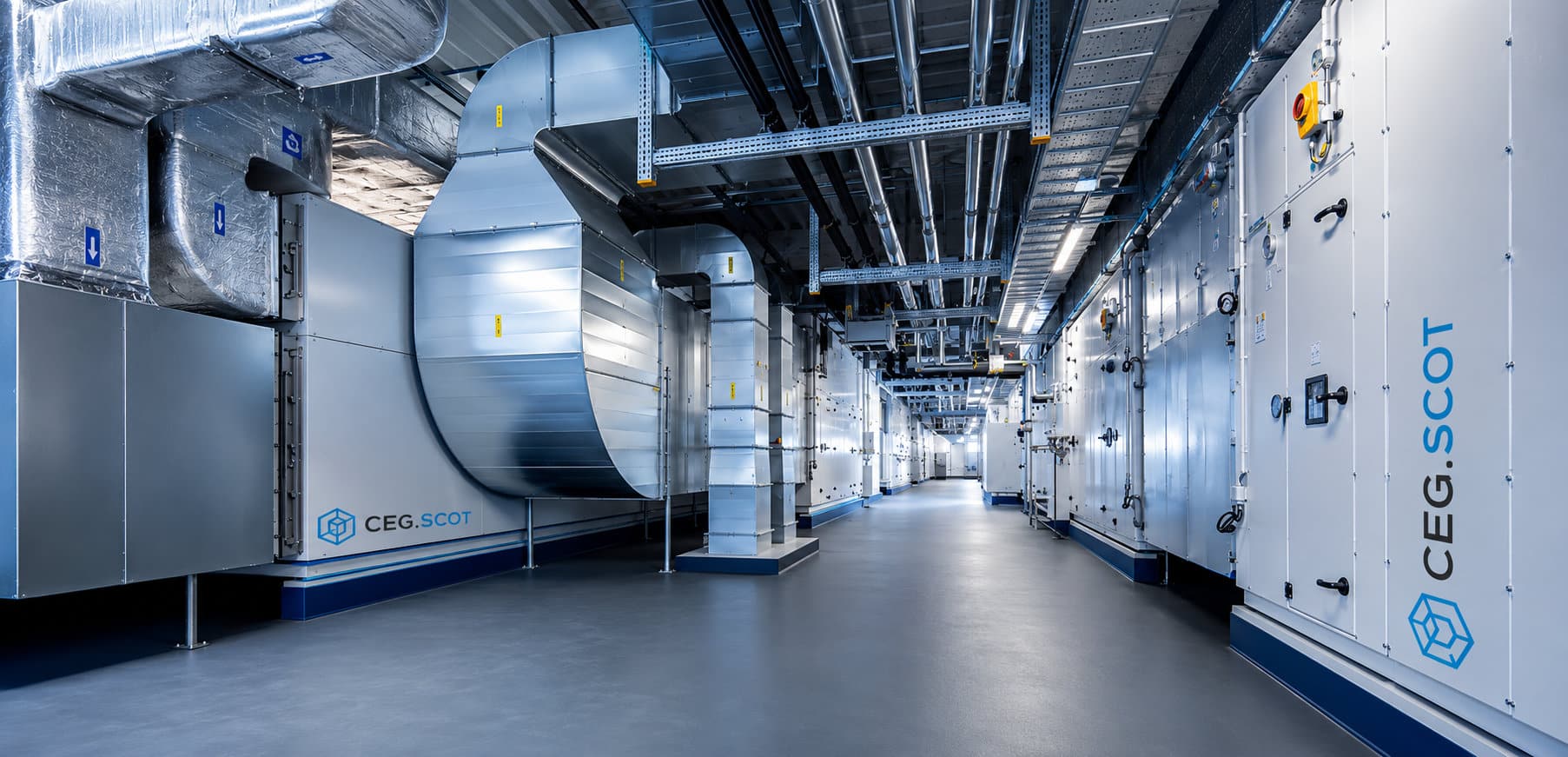
What a VAV System Includes
A VAV system is the full ventilation setup a VAV damper belongs to, not the damper working alone.
Central plant, usually an air handling unit, conditions the air and pushes it through the building’s ductwork to every zone the design serves.
At each zone, a VAV terminal unit, sometimes called a VAV box, takes over. It houses the damper this page covers, along with the actuator and sensor that drive it.
A building management system reads demand at every zone across the variable air volume system and tells each terminal unit how much to deliver.
Without that coordination, VAV terminal units are just boxes with dampers in them, sharing ductwork but not functioning as one system.
How a VAV Damper Works
VAV dampers are sometimes called air volume regulators, and the name describes the job well.
A VAV damper doesn’t heat, cool, or manage humidity itself. The air handling unit does that upstream.
What the damper controls is how much of that already-conditioned air reaches each zone.
Inside the Damper
Inside the housing, a motorised actuator turns the damper blade in small increments rather than snapping fully open or shut.
A sensor reads airflow or pressure at the damper, a controller compares that volume flow against the required air for the zone, and the actuator adjusts the air supplied accordingly.
That gradual movement keeps operation quiet across the full range of airflow conditions, since the airway is never slamming shut or banging open the way a simple on-off damper does.
Better sensors read accurately even at low airflow velocities, which matters at part load when a zone has throttled right back.
Once the damper has regulated the volume, grilles and air diffusers handle the final job of air distribution into the room, so the two products work as a pair.
Pressure Independent Airflow Control
A pressure independent VAV damper holds its set airflow regardless of upstream conditions elsewhere in the ductwork.
A pressure dependent damper, by contrast, doesn’t correct for changes in duct pressure, which means airflow can drift as conditions change elsewhere in the system.
On a multi-zone system, dampers on other floors are opening and closing throughout the day, and a pressure independent design means one zone’s airflow doesn’t drift every time a neighbouring damper moves.
Pressure measurement at the damper is what makes this possible, rather than assuming duct pressure stays constant. Constant pressure systems still suit simpler installations, while pressure independent control adds the most value wherever precise room pressure matters.
VAV vs CAV: Why the Difference Matters for Air Distribution
Constant air volume (CAV) systems dominated commercial ventilation for decades because they were simple to build and simple to control.
Specifying VAV and CAV involves a different conversation with your engineer from day one, and VAV typically costs more upfront to design and commission.
That upfront cost can be offset over the building’s life through reduced energy consumption and operating costs, particularly on larger mechanical ventilation installations with long-hours occupancy.
Not every project needs mechanical control at all.
CEG also supplies natural ventilation systems for buildings where the design allows fresh air to move without fan assistance, though VAV remains the standard where occupancy and load vary through the day.
Circular and Rectangular VAV Dampers
CEG supplies VAV dampers in both circular and rectangular formats, covering a wide range of applications on new build and refurbishment projects alike, with a low-leakage seal when nearly closed, so a zone at minimum airflow doesn’t lose more air than the control loop intends.
Which format suits a project comes down to the duct configuration already in place, the space available for it, the airflow rate each zone needs to handle, and how the wider system is laid out.
Circular VAV Dampers
Circular VAV dampers fit within round or spiral ductwork, typically using a single rotating blade that matches the duct’s internal diameter as it opens and closes.
They suit installations where the ductwork design is already round and the ceiling void has enough depth to accommodate it.
They’re available across a modular range of diameters, so the damper can usually be matched to the duct size already specified rather than requiring a transition piece into the design.
Rectangular VAV Dampers
Rectangular VAV dampers fit rectangular ductwork and typically use a multi-blade design rather than a single rotating blade.
Where ceiling void depth is limited, a rectangular duct can often carry a similar airflow within a shallower space by running wider, which is why rectangular VAV dampers can suit tighter refurbishment ceilings that a round equivalent may not clear.
Acoustic performance is worth checking regardless of damper size, since higher air velocities through any damper can generate more noise if the unit is undersized for the duct.
Rectangular dampers are designed to modulate across their full operating range, not just at the extremes, which matters wherever several zones draw from the same duct run but each needs independent control.

Sectors We Supply and Specify VAV Dampers
VAV control turns up wherever occupancy or heat load swings through the day, which covers most of the commercial building stock.
The specific demands differ by sector though, and a system built for an open-plan office rarely transfers straight across to a laboratory or a data hall.
Across every sector, our team selects VAV dampers to match the project engineer’s specification.
Offices, Retail and Government Buildings
Open-plan offices are a common VAV application, usually working alongside air conditioning to hold temperature and airflow together within range.
Meeting rooms fill and empty, desks turn over through hybrid working, and a VAV system responds to that instead of conditioning every zone for full occupancy all day.
Retail spaces see occupancy shift with footfall and trading hours, from a quiet mid-morning to a busy weekend peak, and a VAV system can respond to that instead of running at one fixed rate all day.
Public buildings and government offices follow a related pattern, though counter opening hours and meeting room bookings often shape demand more than footfall alone.
Healthcare and Laboratory Environments
Laboratory environments often bring particularly demanding VAV control requirements, especially around fume cupboard extract.
Fume cupboard extract typically needs to track sash position and airflow closely, and a pressure independent VAV damper on the extract side is often specified to support room pressure control as the supply side adjusts elsewhere in the building.
Healthcare projects add further compliance considerations, often referencing HTM guidance, where pressure control between clinical spaces is generally treated as a safety matter rather than a comfort one.
Extract air and supply air both typically need dampers selected to support a consistent setting.
Data Centres
Data halls run VAV differently again, tracking heat load from server racks rather than people.
Precision and redundancy are important considerations, since equipment in these spaces can be highly sensitive to temperature swings.
These installations often sit alongside air handling units that share similar precision and heat recovery requirements, with VAV terminal units supplied to support the zone-level distribution the AHU alone may not cover.
Education, Hotels and Mixed-Use Developments
Schools, hotels and leisure centres share an occupancy pattern that swings hard from empty to full, classrooms between lessons, bedrooms between guests, or a pool hall busy at 6pm and empty by midnight.
VAV control reduces the need to condition a full building for a fraction of it in use.
Mixed-use developments combine several of these patterns under one roof, where a VAV system commissioned zone by zone allows each area to be controlled according to its own occupancy pattern rather than one strategy applied across the whole building.
Suited to Net Zero and Smart Building Strategies
Energy efficient building design increasingly incorporates demand-controlled ventilation, and VAV dampers are the mechanism that delivers it at zone level.
A building can target net zero operation on paper, but without airflow control that responds to real demand, the ventilation system can still use more energy than necessary.
Smart building technologies and low carbon HVAC strategies both depend on the same principle. Know what a zone needs, then supply accordingly.
VAV dampers are the component doing that job at the point where air reaches the room.
CEG can supply VAV dampers to suit net zero and smart building specifications from the design stage, rather than airflow control being treated as an afterthought once the wider strategy is already set.
Frequently Asked Questions on Variable Air Volume Systems
Do VAV systems use dampers?
Yes. The damper is the part of a VAV terminal unit that varies the airflow, working alongside the actuator, sensor, and controller that tell it how far to open. Without the damper, a VAV system would have no way to change the volume of air reaching a zone.
What is the difference between VAV and VFD?
A VFD (variable frequency drive) changes the speed of the fan motor itself, while a VAV damper changes the volume of air reaching an individual zone downstream. Larger systems typically use both together, with the VFD managing overall fan energy and VAV dampers handling the zone-by-zone split.
Can you supply bespoke VAV dampers to a specific project requirement?
Yes. Where standard circular or rectangular configurations don’t fit the ductwork, the airflow range needed, or the wider HVAC systems already on site, our manufacturer partners produce units to the project specification. We work through the requirement with your engineer before anything is ordered.
Do you supply other HVAC products alongside VAV dampers?
Yes. Our range also covers air handling units, grilles, louvres and diffusers, and the wider ventilation products and accessories range, including the fire and smoke dampers that are a different product from the VAV dampers on this page.
Rather than juggling separate suppliers for each product line, M&E contractors can bring all of it through us on one enquiry.
Talk to Our Team About VAV Damper Supply Today
If your project is in need of VAV dampers for a new build ventilation system or sourcing replacement components for a refurbishment, CEG is here to help.
Share your project’s airflow rates, duct sizing and control strategy, and we’ll work through the right VAV configuration with you rather than leaving you to match it up alone.
We work with M&E contractors, ventilation engineers, building services consultants, and architects, supplying VAV dampers through our trusted partnerships with leading manufacturers. We’re established across Scotland, active throughout the United Kingdom, and increasingly working overseas.
Contact our team in Glasgow online or by calling 0141 212 3388 to discuss your project and request a free quote.